

Celebrating St. Blaise: Getting Beyond Superstition
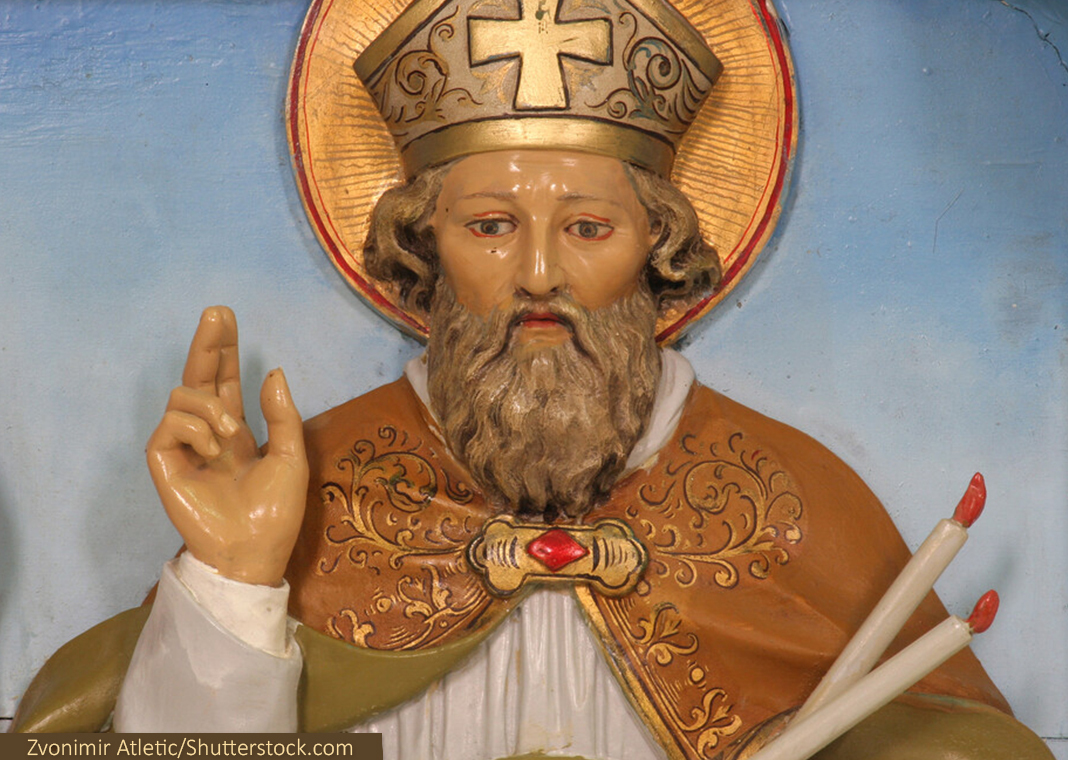
I remember as a kid being thrilled with the Feast of St. Blaise, because it meant that I wouldn't get any more sore throats during the remaining weeks of the cruel Chicago winter. So much of my piety back then was bordering (if not totally over the edge!) on superstition. Why? I was never really taught otherwise. I was taught that the blessing of St. Blaise would keep me not only from getting a sore throat but from choking on a chicken bone. I was told that wearing a scapular would ensure that I would go straight to heaven if I got hit by a bus (which stopped right in front of our house, so believe me, I wore that scapular!). I was told that praying a novena would "work" as long as you did it for nine days; God would not settle for eight.
In other words, I was taught many Catholic practices but was not always properly catechized about the reasons for doing these things. That void is easily filled by superstition. The Catechism of the Catholic Church warns us that:
Superstition is the deviation of religious feeling and of the practices this feeling imposes. It can even affect the worship we offer the true God, e.g., when one attributes an importance in some way magical to certain practices otherwise lawful or necessary. To attribute the efficacy of prayers or of sacramental signs to their mere external performance, apart from the interior dispositions that they demand, is to fall into superstition. (2111)
The blessing of throats is a sacramental, one of the many ways that Catholics express a vision for life that brings the body, the senses, and the spirit together. It is a tangible expression of an intangible inner longing. Superstition says that, "If I do this certain action, I will make God or the saints do something for me." Sacramental faith says, "I want to be holy and constantly under God's protection—always reminded of his desire to keep me close and safe." The sacramental action thus reminds us of how we are to respond to God's grace, which is always flowing.
God wants us to be healthy and to use our bodies to praise him. The blessing of throats is a reminder to us of this grace and our need to respond by taking good care of ourselves and using our voices to lift up and not tear down.
God wants us to pray fervently so that we can better discern his will. And so we pray novenas—the nine days of prayer invoking the nine days that Mary and the Apostles prayed for the coming of the Holy Spirit between Ascension Thursday and Pentecost Sunday—as an outward sign of how fervently we desire to align our will with God's.
God wants us to be holy, and so we wear scapulars as an outward sign of our desire to be holy like the monks and nuns in religious life (whose habit is called a scapular) and to remind us to look to Mary (as Our Lady of Mount Carmel) as a model of holiness.
It's up to us catechists to make sure that those we teach, young and old, embrace Catholic practices, but do so with a firm catechetical understanding of the reasons we practice these pieties and devotions.

Joe Paprocki, D.Min.
Joe Paprocki, D.Min. has more than 40 years of experience in ministry and has presented keynotes, presentations, and workshops in more than 150 dioceses in North America.
See More