

Best Practices for Leading Group Prayer
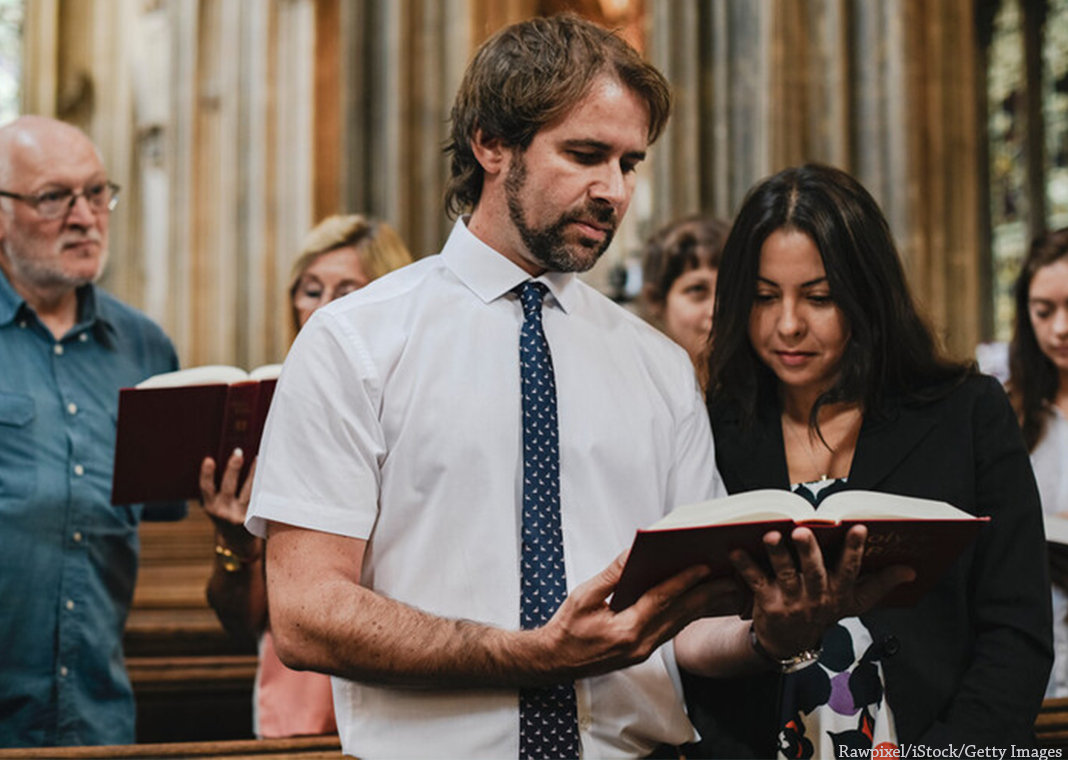
Whenever Catholics pray before group activities—whether a staff, catechist, or parent meeting or a gathering of the parish youth group—we offer all our efforts to the Father. We acknowledge that when we are gathered, Jesus is present with us. We invoke the Holy Spirit to guide us. Group prayers sanctify the activity, reminding us that the ultimate goal is to glorify God.
Yet how many times have we experienced group prayer that seems rushed or perfunctory? Sincere, but stale? I have attended far too many meetings where the opening prayer consisted of a quick Hail Mary, a poem, a recorded song, or a canned prayer service where people take turns reading from a sheet of paper. Yes, we prayed. But was it a good prayer? Or was it simply an obligation we rushed through to get down to the real agenda?
How we pray at our group meetings says a lot about our faith. Because it reflects what we believe about God, prayer can either form or “de-form” people. If we believe that God is present, powerful, and active in all we do, we need to show it.
A Formula for Leading a Group Prayer
Prayer is part of the agenda of any meeting, and it requires our full attention. However, many people are uncomfortable in leading group prayer. They simply aren’t sure how they should model prayers for the meeting. The best course is to look to the public prayers of the Church: the Liturgy of the Word and the Liturgy of the Hours. By imitating them instead of your personal, devotional, or conversational prayer, you will more effectively call people’s minds to God’s presence in your midst.
While most people remember to begin a group prayer with a prayer such as the Sign of the Cross, after that, they don’t know what to do. However, leading a group prayer can be simple and authentic by following this easy formula: You, Who, Do, Through.
- You: Gather in an environment reflecting the current season of the Church Year and pray the Sign of the Cross.
- Who: Address God directly, expressing gratitude for the ways God shows his love.
- Do: Ask for God’s presence and action in the gathering.
- Through: Close the prayer in the name of Jesus.
You may also want to incorporate other practices if you want a more elaborate group prayer:
- Employ verbal formulas from the Mass to help people know how to respond. They won’t need handouts to guide them.
- Use Scripture. You may include a short Gospel reading followed by a moment of silent reflection, or you might want to pray the Scripture using lectio divina.
- Invite participants to pray for their needs and the needs of their loved ones. These intercessory prayers can follow the Prayers of the Faithful from the Mass, where each petition ends with, “We pray to the Lord,” and the response, “Lord, hear our prayer.”
- Incorporate music, poetry, and art to enrich the prayer. By themselves, however, they are not prayer.
- Conclude with a prayer everyone knows, such as the Lord’s Prayer, Glory Be, or Hail Mary. This is the best way to make sure everyone has a part.
Prayers that resemble our liturgy help reaffirm our Catholic identity. They are deep, rich, and naturally participatory. Most importantly, prayers that resemble our liturgy will draw our minds toward the Mass, reaffirming the Eucharist as the source and summit of our faith.
Whenever we gather in Jesus’ name, he is present. We must ensure that our group prayers call the presence of God into our gathering so that we may achieve more in his name. After all, everything we do is to bring God glory.
Making Your Group Prayer Meaningful
How do you choose the content of prayer so that it is meaningful for participants? Every group has different needs. When prayer is “one size fits all” it can be hard for people to feel it has a meaningful connection to their lives and to the reasons they are gathering. You need to be intentional and reflective when planning prayer, instead of merely making it feel like one more item on the agenda—something to get through on the way to the real work of the meeting. When we pray, what we pray about, and who we pray with all make a difference.
To make your prayer meaningful for your group, it can be helpful to consider the following:
- WHY: What is the main concern or reason for this gathering?
- WHAT: Are there decisions to be made? Tasks to be accomplished? What outcome would you like to seek from God?
- WHO: Who is praying and what do they need most? What are they willing to ask for?
- HOW: What blessings has God already given for which we need to express thanks? What gifts and charisms do the participants have? What favorable situations have come about?
- WHEN: What is the season of the liturgical year? Are there prayers or songs related to this season that could be incorporated as part of the prayer? What time of day is the gathering taking place? Would it be appropriate to incorporate elements from the Liturgy of the Hours?
- WITH WHOM? Is today the feast of a particular saint? Is there a prayer associated with that saint or a particular patronage of that saint that would be meaningful to the participants?
- FOR WHOM: What else/who else in the community—and the world—is in need of prayer? Can the group intercede for another important need?
- THE LITURGY: Is this meeting related to sacrament preparation? Are there any prayers from the rite of the sacrament that could be used as part of the text of the meeting's prayer? What are the readings for the upcoming weekend? Are any of them particularly related to the topic or the lives of those invited to this gathering?
While all of these don’t need to be present in the final prayer text, this procedure for preparing prayer helps you, as a leader, focus on the spiritual needs of the participants and the community. The care that you put into planning meaningful prayer will pay off in a deeper connection between the actions of the Holy Spirit and the activities of the group.

Joyce Donahue
Joyce Donahue, MA, MPS, is a liturgical catechist and former diocesan administrator.
See More