

From the High of Pentecost to the Reality
In the First Letter of Peter to the Christian communities of Asia Minor, we learn that the communities appear to be struggling, and the writer makes frequent exhortations to remain faithful in belief and conduct to the teachings handed down to them. He reminds them of their hope in the saving grace of Baptism, salvation through faith in the Passion and Death of Jesus, and the promise of enduring love and eternal life. Christians in these communities are called to be holy in their personal lives, their family lives, and their public lives. They might have to suffer for doing the right thing or professing their faith in Jesus Christ. The writer also encourages the elders of the communities to “tend the flock of God that is in your charge . . . [by being] examples to the flock” (1 Peter 5:2–3). The new Christians discovered that it isn’t easy being a Christian.
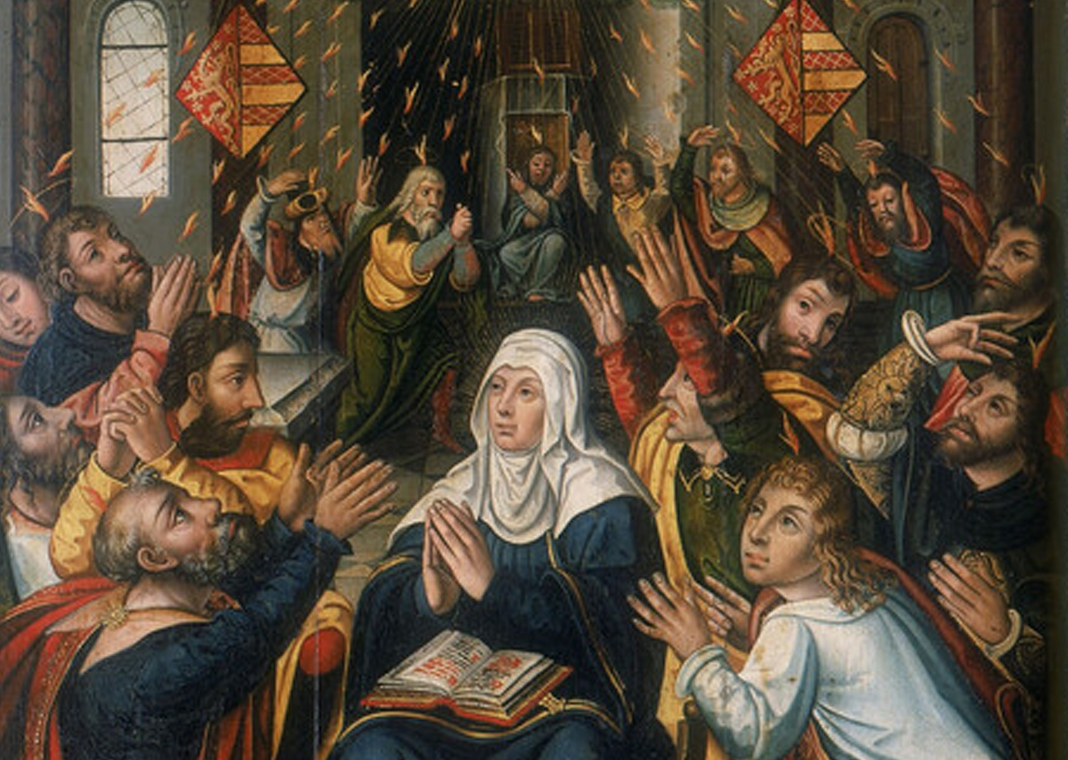
On Pentecost, as the disciples were gathered, a sound like a great wind filled the room, tongues of fire appeared above each one, they were filled with the Holy Spirit, and many disciples began speaking in tongues. All were amazed and perplexed. But some observers just thought the disciples were drunk. In those early days the believers exhibited great signs and wonders as they revealed the power of God throughout the region. They were on fire!
How long did it take to go from the high of Pentecost to the reality of Asia Minor?
We too are children of Pentecost living in Asia Minor. We have received the outpouring of the Spirit, yet find ourselves facing the reality of the human condition. As we approach the Feast of Pentecost and with great anticipation await the outpouring of the Holy Spirit, we are reminded as catechetical leaders of our responsibility to be witnesses to others of our faith, hope, and love. How, exactly, does the Spirit enflame us and enable us to “tend the flock of God” that is in our charge? What is the nature of the Spirit in the life of the Church and our ministry?
The Catechism tells us that in order to fulfill our mission of proclaiming and establishing among all peoples the Kingdom of God, we are endowed with the gifts of charity, humility, and self-denial (CCC 768). We teach our children preparing for Confirmation about the sevenfold gifts of wisdom, understanding, right judgment, courage, knowledge, reverence, and wonder and awe, which make it possible for us to do what God desires of us. We consider the cardinal virtues of prudence, justice, fortitude, and temperance along with the theological virtues of faith, hope, and love, necessary characteristics of a godly life. What all of this tells us is that we are completely and unequivocally dependent on the indwelling of the Holy Spirit in order to be the people and the leaders God has called us to be.
The reality is that I am faced every day with opportunities to allow God’s Spirit to dwell within me. The reality is that the people I serve may be more affected by who I am than by what programs I organize or how timely the newsletter is. The reality is that I need daily reminders to open my heart to God’s Spirit. The reality is that I am human.
Where do I need God’s Spirit in my life and ministry today?

Pop-Up Catechesis: Pentecost and Our Need for an Advocate
Some years ago, when I was serving as a catechist for an eighth-grade faith formation group, I was blessed to have an outstanding catechist aide. Let’s call her Mrs. Kelly. As it turns out, Mrs. Kelly was a nurse at nearby Advocate Christ Hospital. When it came time for us to teach about the coming of the Holy Spirit—our Advocate—on Pentecost, I asked Mrs. Kelly to describe her work as a nurse in pediatrics and how she acts as an advocate for her patients. She did a wonderful job of explaining the many ways that she and other nurses and medical personnel advocate for patients. When she was done, I told the young people, “When you think of the Holy Spirit, I want you to think of Mrs. Kelly and how she advocates for her patients, who are children like you. That’s what the Holy Spirit is like.”
—Joe Paprocki, D.Min.