

Responding Compassionately to Families Whose Children Are “Out of Sequence” for Receiving the Sacraments
“Good morning! My son is in the fifth grade and hasn’t received his First Holy Communion yet. How can we get started?”
“Hi there! My daughter is a senior in high school and would like to be confirmed before she leaves for college. What does she have to do?”
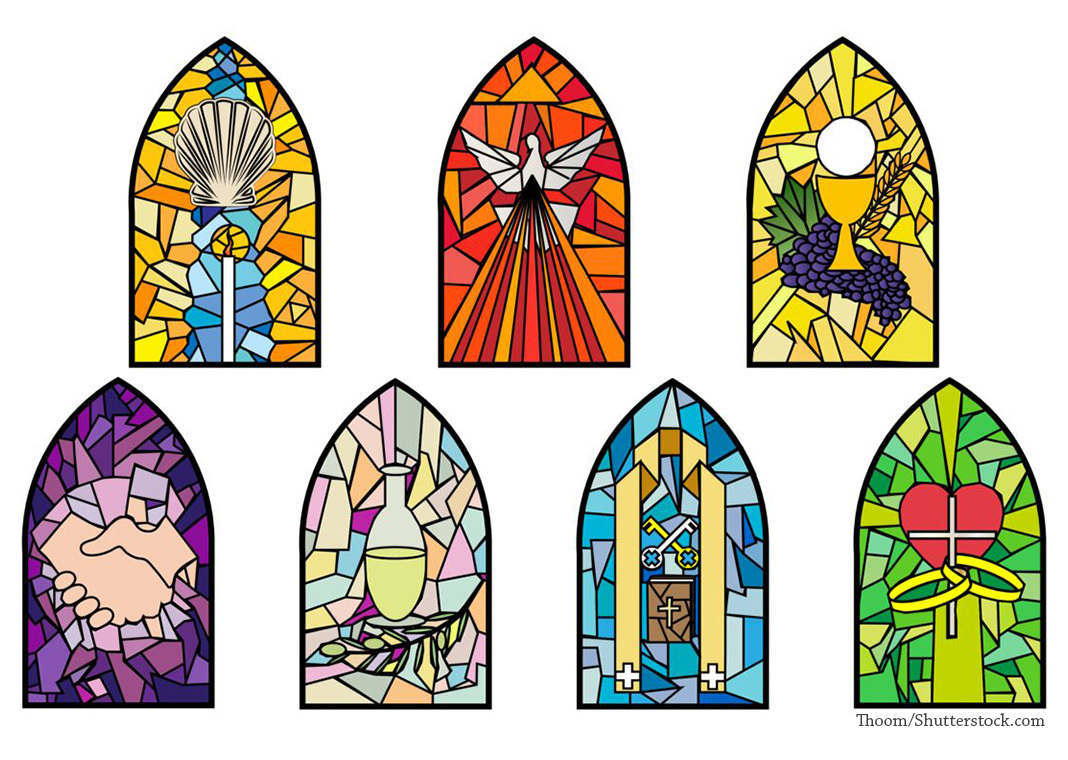
For Roman Catholics, there is a traditional sequence to receiving the Sacraments of Initiation and First Penance and Reconciliation: Baptism in infancy, Reconciliation and Eucharist at the age of reason (understood to be about age seven), and Confirmation in mid-adolescence. Of course, for dioceses celebrating Confirmation in the Restored Order, the sacrament is received at an earlier age. We find an innate rhythm in this sequence of celebrating Christ reaching out to us and the outpouring of his grace sustaining us through the stages of natural and spiritual life. To us, it makes sense.
So when we encounter parents who opt to delay the sacraments for their children—and contact the parish whenever the time seems right for them—it sometimes challenges our sensibilities. A feeling of angst may lead us to begin our conversations with a list of what families are to do. Instead, we should lead with an attitude of Gospel-inspired joy: “‘But we had to celebrate and rejoice, because this brother of yours was dead and has come to life; he was lost and has been found’” (Luke 15:32).
While the particular details for delaying the sacraments are unique to each family, the three reasons I hear most often are:
- I wanted my child to be old enough to interiorize the depth of the sacraments and make his/her own decision about when the time is right to receive them.
- My life is so busy I just never got around to it. But I’m here because my child’s grandparent has been pressuring me.
- I forgot.
When I hear these, my heart fills with compassion. When I encounter reason #1, I reflect upon how the Sacraments of Initiation lay the foundations of Christian life. I wonder how, without the grace of the sacraments, a child will be able to interiorize who Christ is for him/her.
When I hear reason #2, I understand how parents can become overwhelmed by the busy-ness of life, thereby delaying the sacraments. Often, their connection to the Church and their parish is through the grandparent. But they run the risk of increased detachment from the faith community. After all, to grow in faith we “need the community of believers. It is only within the faith of the Church that each of the faithful can believe” (CCC 1253).
Reason #3 typically comes from a family who rarely attends Mass. But while they “forgot” to assist their child in responding to Christ’s call to the sacraments, Christ has never forgotten them. I reflect on ways that I may bring the Parable of the Lost Son to life and rejoice in their return!
Each family situation is deeply personal, and nurturing a sense of community takes time. But here’s how we can get started with ministering to children who don’t follow our traditional catechetical sequence:
- Pray for them! Wrap a cloak of compassion around parents and children, especially those for whom the fire of Baptism and the kerygma seems to have burned down to embers and is in danger of growing cold.
- Take this as an opportunity to practice synodality. Listen to the parents’ stories, and find common ground. Strive to better understand them, their family life, and their community and culture. Help them to build relationships with other Catholic families. (Think social networks.) Be a welcoming presence when these families attend Mass.
- Have a flexible catechetical plan that will allow catechists to involve parents of children at a variety of ages and stages.
When we understand and respond compassionately to the needs of families whose children are “out of sequence” for the sacraments, we embody Gospel values, which in turn illuminate a path for us to continue to grow together in faith as children of God.

Jayne Ragasa-Mondoy
Jayne Ragasa-Mondoy serves as Director of Religious Education for the Diocese of Honolulu which is comprised of the six major islands in the state of Hawaii.
See More