

Saint Matthew
Feast Day September 21
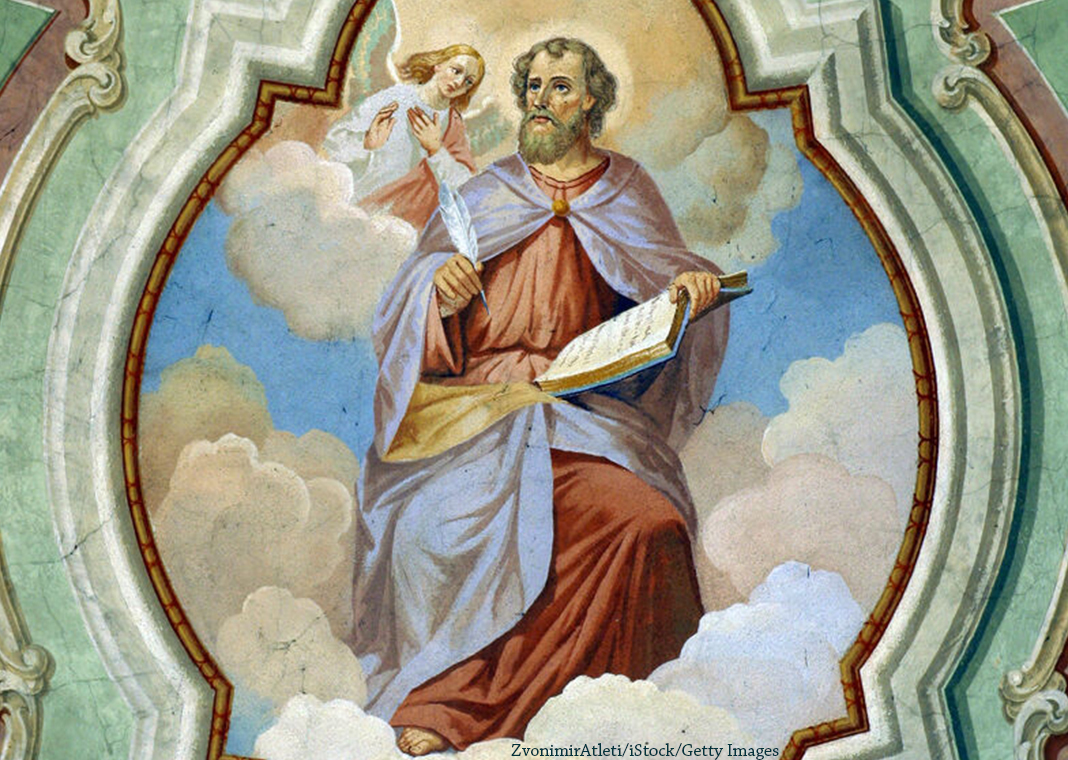
There are leaders, and there are followers. It's important to know that being a follower is not a bad thing—that is, as long as you are following the right person or thing! Disciples are basically followers. To be a disciple is to adhere to the teachings of someone. In the Gospels, anyone who adheres to the teachings of Jesus is referred to as a disciple. Today, the Church is calling each of us to discipleship—to adhere to the teachings of Jesus in our thoughts, words, and actions. On September 21, we celebrate the Feast of St. Matthew, a former tax collector to whom Jesus said, "Follow me."
For more information about St. Matthew, read Meeting St. Matthew Today by Daniel Harrington, SJ.
Matthew's Use of Scripture
Matthew's Gospel directly quotes the
Matthew was not concerned that each individual verse he quoted proved Jesus to be the Messiah; his vision was much larger. For Matthew all of Scripture is fulfilled in Jesus Christ.
Matthew, a Gospel for Jewish Christians
The destruction of the Temple in Jerusalem in A.D. 70 created a crisis for Jews. Up to that point, their religion had been built around the worship of God in the Temple. But now the Temple was gone, and there was no center to Jewish life. One response to this crisis was given by apocalyptic writers, who saw the destruction of the Temple as a sign of the coming end of the world. Another response was given by the successors of the Pharisees, who set about developing rabbinic Judaism, the forerunner of the Judaism of today. A third response was made by those Jews who believed that the correct path for Judaism to follow was the one outlined by Jesus. Matthew presents this response in his Gospel, which is an attempt to define Christianity in terms that would make sense to those Jews who had accepted Jesus as Messiah. Matthew's argument is not with the apocalyptic writers, as there is some of their thinking in his Gospel. His argument was with the new rabbinic movement, and his purpose was to help his largely Jewish community maintain its faith in Jesus within the context of their Jewish heritage.